Negotiating Rights And Learning From Old School Publishing

This Friday I’m recommending two blog posts by Kristine Kathryn Rusch, a New York Times and USA Today bestselling author, editor, and publisher. I came across both because I’m heading to a conference focused on the business aspects of being an author, and she’s one of the presenters.

Her blog contains a wealth of information for authors.

For example, in Business Musings: Pulphouse, Alternate History, & the Modern Era, Rusch talks about launching a quarterly hardback magazine with her husband in the pre-Internet, pre-ebook days when publishers had to pay for print runs and sell mainly through book sellers.

She covers what worked well–such as creating an Issue Zero with a striking cover and blank pages to send to authors when asking them to submit stories–and the many, many mistakes made.

One mistake involved not having a plan to deal with the 90-120 day lag time between paying for the costs to publish and collecting revenue. Another was underpricing the publication.

While much has changed in the publishing world since then, Rusch shows how the lessons learned apply to authors today.

In Business Musings: My Day in Negotiation, Rusch discusses negotiating rights, including for television deals, and why she prefers to do so herself rather than relying on an agent.

If, like me, you think it’ll be quite a long time, if ever, before you’ll need to deal with offers for movie or television rights, this is the right time to read the advice.

In fact, it’s probably the best time because you can consider it and learn more before you’re in the middle of a discussion. Plus, when there’s an offer on the table, it can be hard to get past your excitement and be objective about the terms of the deal.

Business Musings: My Day in Negotiation

Until Sunday–

L.M. Lilly

Should You Use Beta Readers?

Five or six years ago I’d never heard the term beta reader. Now almost all authors I know use them as part of their revision process, as do I.

Recently, however, I read a post by Dean Wesley Smith that cautions against relying on beta readers.

A beta reader looks at a complete manuscript and gives the writer comments. This person is not a professional editor or an author, but is someone who reads a lot, ideally in the genre in which the author is writing.

Some authors send beta readers a first draft.

I usually send my novel out only when it’s close to finished. My early drafts are very rough, and I do a lot of my writing in the rewriting phase. I don’t want other people’s views to skew my take on my own story.

The main benefit I’ve found from beta readers is that they let me know when they can’t follow or don’t understand a scene or plot twist. Also, if they don’t understand why a character does something or strongly dislike a character I’d thought readers would resonate with, it cues me to double check to see if enough of what I know about that character has actually gotten out of my head and onto the page.

Some authors use dozens of beta readers and try to incorporate all of their comments. For me, that would be overwhelming, so I’ve never tried it.

In Killing The Sacred Cows Of Publishing: Beta Readers Help You Dean Wesley Smith strongly discourages using multiple readers, as it can easily turn into writing by committee.

Also, and contrary to much of the common advice to indie authors, Smith argues against using beta readers at all, stating: “Grow a backbone and believe in your own writing.” He makes good points about the downsides of the process and also about the fears and lack of confidence that may motivate writers to seek out many opinions.

If you’re using or considering using beta readers, I highly recommend checking out his post.

Until Sunday-

L. M. Lilly

Boosting International Sales Of Your Books

It’s easy to focus on marketing and selling your books mainly in the country where you live, especially for those of us who grew up when print ruled the world and it was hard to buy books from another country.

These days, though, many authors make a significant portion of their sales from readers who live in countries other than their own.

As this article from BookBub explains, there’s a lot you can do to increase international exposure of your work. First, be sure to make your work available on the platforms popular in the countries you hope to reach. For instance, Kobo is the most popular e-reader in Canada, so if you publish only on Kindle, you’re missing a lot of readers.

Another is to target your advertising to particular countries.

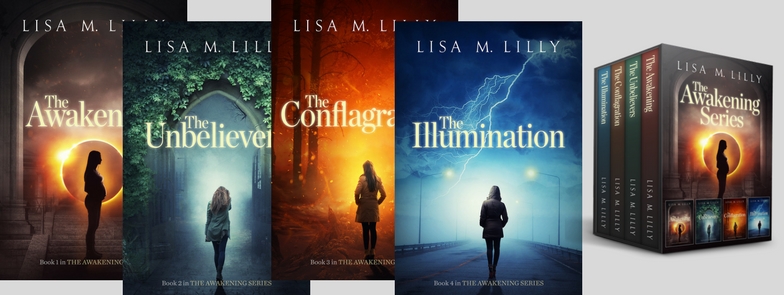
Just yesterday, I placed my first Facebook ad for the 4-book Box Set for my Awakening supernatural thriller series. I decided to try targeting readers in Canada who like Dean Koontz and similar authors and who listed interests that included e-readers, Kobo, or reading. It’s too early to say how it’s going, but my readership in Canada has been growing, so I figured it was a good way to start my ads.

For more on growing your international sales, check out the BookBub article:

How to Market Your Book to Get Worldwide Exposure

Until Sunday–

L.M. Lilly

Author Beware

If you’re publishing your own work or planning to, there are companies and individuals out there looking to make money off of you.

That’s not necessarily bad. Professional cover designers and editors, for instance, provide a valuable service that authors should expect to pay for.

Unfortunately, though, some individuals and companies offer services at prices far higher than their value, make promises they can’t keep, or are out-and-out scamming authors.

That’s why this Friday I’m recommending two sites to check when you’re contemplating spending money on publishing, David Gaughran’s website and the Alliance of Independent Authors’ Self-Publishing Advice Centre.

The Alliance of Independent Authors (ALLi) provides advice on writing, marketing, book rights and contracts, book design and formatting, and more.

You can use the Search function on the self-publishing advice page to search for a particular company or type of service, or you can click on a specific topic to scroll through information. (You can also search on the specific topic pages.) You don’t need to be a member to read any of this information.

David Gaughran also regularly writes about topics to help indie/self-published authors succeed. Recent topics include improving results with ads on Amazon, scammers in the Kindle store, and the importance of making sure your book is exclusive to Kindle Unlimited if you participate in that program.

He also exposes services that are bad deals for authors. As with ALLi, you can use the search function on his site to see if he’s written about a company or service you’re considering paying.

Have you found a site that’s particularly helpful in calling out services, individuals, or companies that may be taking advantage of indie authors? If so, please share it in the comments.

Until Sunday–

L.M. Lilly

Listening To Jim And Bryan Talk About KOBO And Audiobooks

A while back I wrote about earning additional income from a book you’ve published in ebook format by an creating an audiobook. At the time, the only way indie authors I knew were doing so was through ACX, an Amazon-related company.

The latest option on this front, though, is KOBO. Because for my Awakening series, I entered ACX-exclusive contracts, those books will stay with ACX for seven years each.

If you’re starting out, though, you may want to explore other options, which is why I recommend listening to this week’s Sell More Books Show.

Each episode is always valuable, so I recommend listening to all of it. If you’re short on time, though, and are particularly interested in audiobooks, you could skip to No. 2 of the Top 5 News items. You’ll find it 44:51 minutes into the podcast.

But, again, definitely worth listening to the whole show. It includes Amazon’s efforts to deal with scammers, info on making Amazon Ads pay, and tons of other great tips.

Episode 180 – Kobo Audiobooks, AMS Advice, and Scammer Crackdowns

Until Sunday–

L.M. Lilly

Planning A Launch Party For Your Self-Published Book

So your paperback version of your book is almost ready. How do you let the world know?

One way is to host an in-person book launch party. (You can also have an on-line party, but that’s typically directed toward ebook sales.)

In the days of traditional publishing, your publisher probably would arrange a party at several books stores in different parts of the country. Now both traditionally and independently published authors usually need to take the reins on planning.

So let’s talk about the why, when, who, what, and how much of your party.

Here’s one of the book release banners I created using Canva.com:
Reasons To Host An In-Person Book Launch Party

The best reason to have any party is to celebrate, and that’s the best reason for a book launch party as well.

You’ve worked hard, you’ve finished and published your book, and you want to celebrate with other people. Don’t lose sight of that as you plan. Have fun!

A party also helps raise awareness of your book, especially among people who don’t read on ereaders.

People tend to assume if you publish your own work, you only publish in ebook editions, even if they see an ad or a Facebook message that says otherwise. But when you invite them to a paperback book release party, it sinks in. You’ll be surprised how many people will attend and tell you they didn’t know your books were available in paperback.

A party also gives you a reason to contact people. Very few people want a “buy my book” message in their email In Box or on social media, but a party invitation is different. It’s fun.

It also gives others a reason to talk about your book. They may mention that they’re going, invite others along, or talk about the event afterward.

Where To Host Your Book Release Party

If there’s a bookstore that’s carrying your books, you can approach the manager or owner about having a party there if there’s space. A store that doesn’t carry your books might also be willing to host if it will help bring new people to the store or increase sales. My view is, it can’t hurt to ask.

But don’t feel limited to bookstores.

It can be easier to get people to come to a bar or restaurant, and those venues make it feel more like a celebration than a book reading.

Also, a bar or restaurant makes it easier to serve food and drink. While I’ve been to book release parties at bookstores where they allowed the author to open a few bottles of wine, usually the snacks and drinks are pretty limited.

The easiest and least expensive places to host often are ones where the cafe, bar, or restaurant is one with counter service. Most managers or owners are happy to reserve a portion of the space for you. You handle your own book sales, and the establishment makes money off people buying coffee, drinks, or appetizers.

If you want to treat your guests, you as the author can buy appetizer or pastry trays and/or pick up the tab.

I’ve recently been to an evening book release party at a private room in Chicago’s House of Blues and a Saturday afternoon one in a small Italian restaurant where the authors reserved the whole space. I’ve hosted parties in a Cosi cafe and in a coffeehouse, and I’m having one in Soppraffina Market Cafe in downtown Chicago later this month.

If you’re inviting a small number of people, you can also host at your home or at a party room if you live in a multi-unit building. (The lawyer in me insists that I remind you to check to be sure your liability insurance will cover this type of event.)

Whom Should You Invite?

In person parties are about connecting with current fans and reminding acquaintances, friends, and family that you have a book (or books) out rather than bringing in new readers. That’s because unless you’re already famous or you’ve written non-fiction on a hot topic, it’s unlikely people who don’t already know you (at least through a mutual acquaintance) will attend your party.

One exception is that sometimes someone you invite will bring a friend, and that person will become a fan. That’s always a good thing, so let people know that they are free to invite others.

Invite friends, family, acquaintances, and–unless you’re keeping your writing and work life separate–coworkers and other business associates.

Also invite anyone else you’re in touch with who you think might be interested, even if you’ve never talked about books with that person before. You never know when you’ll discover that a person you’ve met once or twice really enjoys the type of book you write and will be thrilled to discover you’re an author. Sometimes these people become your best advocates.

Remember, this is the perfect time to let everyone know you have a book out.

Don’t worry, if people aren’t interested, they’ll RSVP No or simply delete the email or invite. As long as you don’t hound them about why they’re not attending, you won’t offend them.

How Much Will This Cost And How Much Will You Make?

For most authors, an in-person event isn’t a money maker. In fact, it might cost more than you take in. Think of it as advertising and, again, as the celebration it is.

How much you spend depends on your budget. The event I attended at the Italian restaurant had a lovely appetizer table and an open bar. I didn’t ask, but it had to be quite pricy, I’m guessing at least $40/attendee if not more. The second event I attended had appetizers that were passed by servers and a cash bar, including for water or soda.

If you are on a tight budget, though, you can opt for the bookstore or coffeehouse approach and have limited refreshments or let people buy their own.

The event I had at Cosi cost me about $100 for sandwiches and pastry trays. (The manager gave my guests a 10% discount on their drinks, which was nice.) I also spent about $40 on drawing prizes. I sold 40-50 books, netting $4 per book.  So I broke even on the event, but I also added quite a few people to my email list.

For my September 21 event, I’m threading the needle price-wise. I’m having an appetizer bar and passed hors d’oeuvres as well as non-alcoholic drinks, but it’s a cash bar for alcohol. (As you might guess, including an open bar would have nearly doubled the cost.) This will cost about $27 a person.

Will I sell enough books to cover that? Probably not, but it’ll be a great time.

What Do You Do All Evening?

Most book release parties last a couple hours. To make it more fun for your guests, it’s nice to do more than have your books available.

I usually have a trivia quiz about the events in the first 1-2 books in the series and a separate drawing for anyone who signs up (or already is on) my email list.

Prizes usually include an autographed book, a $25 Amazon gift card, an Audible download code, and having a character named after the person in a future book. (To my surprise, that last one is the prize almost everyone wants.)

It’s a good idea to enlist a good friend to handle book sales so you can chat with people and sign without sitting behind a table all night.

You can also read some pages from your book. I personally don’t usually do that, as it changes the party atmosphere. One author I know played a portion of his narrator’s reading of the book. I’m considering asking the narrator for The Illumination how she feels about that, as she has a wonderful voice, and I’m so excited about her take on the characters.

Some authors, rather than sell their paperbacks, give them away and ask people to write reviews.

I haven’t tried this myself and am a little skeptical. Some people will attend and buy (or accept) a copy of your book to support you, but they may not be big readers or may not read in your genre. So while they may mean to write a review, they may never finish the book and do it, and you’ll be left with an acquaintance or friend who feels guilty every time they see you. (Sort of like when you loan someone money.)

And if it’s not their usual genre, you run the risk of them disliking the book and either avoiding writing the review or writing a poor or lukewarm one. See guilt issue above.

Despite that, if you want to try this approach, my advice is to give out the books and say something like, “If you like the book, please write a review. It’ll really help me out.”

Good Luck!

If you have questions or have already hosted your own party and want to share your experience, please post in the comments.

Thanks,

L.M. Lilly

P.S. If you’re in the Chicago area September 21, 2017, and would like to attend the book release party for The Illumination to get ideas and help me celebrate, here’s the info.

Writing A Book Description For Your Sales Page

One of the toughest things for self-published writers, especially novelists, is to write sales copy for your book. I say “especially for novelists” because we’re used to writing long. If you’re like me, even your short stories tend to top 20,000 words.

Also, most of us never had training in copywriting, and writing a book blurb that will sell seems as foreign as being asked to come up with a magazine ad or television commercial.

That’s why I recommend Bryan Cohen’s How To Write A Sizzling Synopsis: A Step-by-Step System for Enticing New Readers, Selling More Fiction, and Making Your Books Sound Good.

As the subtitle suggests, the book provides clear, simple steps you can use to write a gripping description of your novel. I found the exercises extremely helpful. Best of all, the way Bryan Cohen broke the process down alleviated my anxiety about writing a good description.

Until Sunday–

L.M. Lilly

Competition v. Comparisonitis

Lake Michigan on a cloudy day.

Today four friends and I spent a few hours on Lake Michigan. We don’t own a boat–we chipped in together at a charity event to share the cost of a cruise. The man who donated it owns a 50-foot yacht, and he took us around the lake.

The experience got me thinking about how often we compare ourselves to others who have more money or success than we do. In the book world, this means looking at authors who’ve sold a little more (or a lot more) and feeling unhappy with our own progress.

The day started when we parked near Belmont Harbor and walked along the docks. I marveled at all the people who have the money to buy and maintain boats.

I checked and Google told me the average price of a 41-45 foot boat is $250,000-$550,000.

As I’m not that much of a lake or outdoor person, I don’t know if there’s any amount I could earn that would make spending that much worth it to me. But I admit to feeling a twinge of envy that there are people who can afford to pay more than my condominium cost for recreation.

The middle part of our cruise involved a stop in a harbor near McCormick Center where a famous 198-foot yacht is docked. You can see it here through the window of the boat we were on. It has 6 cabins for guests and 7 cabins for crew. Its estimated value is $750 million.

The owner of “our” boat laughed at how small his yacht seemed in comparison.

Which is when it hit me–no matter where you are or how well you’re doing, there’s always someone doing better.

Going back to writing and selling books–if you have no books published, you might look at someone with one or two and feel like you’re so far behind.

But when you do publish a first book or a second, rather than congratulate yourself and feel good, it’s easy to immediately compare yourself to people who’ve published a seven-book series or whose books top Amazon best seller lists all the time. If you reach that mark, you might look at people who are New York Times Best Sellers or publish a book every other month.

Or maybe from the start you look at J.K. Rowling or Stephen King and think, “Why am I not there?” Or worse, think “I’ll never get there.”

It can be good to look at someone who’s ahead of us, who’s achieved what we hope to achieve. It motivates us when we’re tired or frustrated, just as runners who race with those faster than them tend to increase their own times. That’s why it’s good to aim a bit beyond wherever you are.

But if you look too far ahead or do it too often, it can be discouraging.

From me to J.K. Rowling is a gap that appears unbridgeable, and the reality is, few writers will ever achieve that level of fame and monetary success, though they may earn a very good living.

So when choosing who to compare yourself to, let your feelings be your guide.

If thinking that someday you could own a castle like J.K. Rowling’s causes you to sit down and write when you don’t feel like it or to research those advertising opportunities, then by all means do it.

But don’t compare yourself to J.K. Rowling if it makes you feel hopeless or that you’re falling short no matter what you do.

Instead, try looking to someone whose writing you like and who has one more book out than you do (even if that person has one and you have none). See what you can learn from that person’s writing or marketing. Set a goal that’s a little higher than you think you can reach and start working.

And don’t forget to write down where you are now and set a time six months or a year down the road to check in on your progress. That way, when you get the book finished and published, or you reach the sales goal you set, you’ll remember where you’ve been and you’ll give yourself credit, rather than looking again to someone else and feeling you’ve fallen short.

And if you don’t quite reach your goal?

That’s valuable feedback, too. Use it figure out what you need to do differently, set a new check in date, and get back to work.

Good luck!

Until Friday–

L.M. Lilly


If You Read One Book On Marketing This Year…

If you only have time to read one book this year on marketing, the latest edition of How To Market A Book should be it.

Here’s why:

Information Without Overload

Reading the book feels like sitting down and chatting with the author, Joanna Penn.

Penn covers in depth multiple ways to market your book, which could easily be overwhelming. But in her intro, closing, and throughout she makes clear that you can’t do all of it, and that not every approach works or feels right to every author.

I really appreciated that because it seems every day I’m reading or hearing about something I “should” be doing to sell or market. This book includes them all, expertly breaking them down while acknowledging that it’s okay to not do some of it.

How To Market A Book: Sell More Books, Reach More Readers

Overall Marketing Principles

How To Market A Book (3rd edition) challenges marketing myths and shares marketing guidelines in the first part, which includes an overview of discoverability and other big-picture issues.

Even if you’re familiar with many of these already, it’s worth reading for a quick, clear overview.

Fundamentals For Success

The second part of the book gets into specifics like choosing categories and keywords for your book, pluses and minuses of publishing your ebook edition exclusively with Amazon, and pricing.

Each point includes detailed, specific information you can put into practice right away.

Short-Term Marketing

Part 3 covers short-term marketing issues like getting reviews and using paid advertising. This part is especially valuable because you can implement these strategies whether or not you have an author website or platform. I only finished the book last week but already I’ve referred back to some of the topics.

Building A Platform

The next section focuses on long-term marketing by building your author brand.

It includes specific, practical advice on building a website, email marketing, blogging, podcasting, book trailers, PR, and more. I plan to use the podcasting section as a step-by-step How To guide if my plans for a starting movie podcast next year come to fruition.

Book Launches

The last section details book launches, addressing differences between indie and traditionally-published authors, soft launches, relaunches, and numerous other things you need to know.

You’ll also find a launch checklist, which is another example of how practical and clear the advice in How To Market A Book is.

The book also includes an appendix with questions to answer if your book isn’t selling. It functions as a perfect recap of everything covered, and I plan to review it every few months as a refresher.

Until Sunday–

L.M. Lilly

P.S. I’m gradually building a list of helpful books on writing. If there are any you think should be added, please note them in the comments or email me: [email protected]


Canva (Tools of the Writing Trade No. 2)

Canva is a DIY graphic design site that can help your writing career.

Whether you’ve had books published by a traditional publisher, publish your own work, or hope to do either, part of being an author is sharing your work and letting people know about you.

Many of us are introverts, though, and/or dislike or fear being “salesy.”

Social media is one way to connect with potential readers in genuine ways, and Canva offers a good tool for making your posts more engaging and fun. Canva can also help you create book covers.

What You Can Do On Canva

Canva offers a Do-It-Yourself platform for graphic design.

If you’ve ever seen someone post an inspiring saying across a beautiful photo of a sunrise on Instagram or Facebook and wished you could do that, Canva is one place where you can. If you want to create a Facebook ad and aren’t sure how to put it together or make it the right size, the tools on Canva can help.

Also, on Canva I created this cover for my story structure book. While for my novels I hire a professional designer, I did this one to try out Canva and also to see if there was reader interest in the topic of the book before spending a lot to publish it. There has been, so later this year, I will likely have a new cover done. In the meantime, judging by sales, this one conveys the content of the book well enough.

How To Use Canva

The site provides free templates for specific social media platforms. Among others, there are Twitter, Facebook, and Instagram post templates, blog and Tumblr graphics, and ebook cover templates.

Canva also offers backgrounds, photos, and illustrations to use in those templates. Another option is to drag and drop your own images.

I created the banner on my author Facebook page using my Awakening book covers, and the banner atop this blog using Canva stock photos.

Most of the graphics for this blog were created on Canva. I plan to use the one on the right in an upcoming post. It combines three images I found when I searched for  “lists” and “categories.”

What Does Canva Cost?

You can create an account for free using your email address. As soon as you sign on, you’ll see many free templates.

Canva also offers multiple photos and illustrations free. Sometimes a particular image you want will be a stock photo that requires payment. The banner for this blog includes two photos I needed to pay to use, but it was worth it to me because I really liked them.

The cost varies depending upon use. If you are using a photo in one social media post, it may cost $1. If you want to use it continuously, the same photo may cost $10.

The single-use cost of the photo appears on the left when you are choosing to incorporate it in your design, but you don’t need to pay unless or until you download it for your own use. When you do, the license options will appear.

Occasionally it’s disappointing to discover that a photo you loved is out of your budget for long-term use. But that’s only happened to me a couple times, and given all the experimenting and free work I’ve done on the site, I don’t mind.

Also, you can usually download a free sample of your design to try it out. It will have the word Canva written across it, but it’s helpful to make sure you like what you’ve designed before you pay.

In the seven months I’ve used Canva, I’ve created two e-book covers, numerous blog graphics, Facebook and Twitter banners, and occasional social media posts.

All that has cost me less than $50, and I could have done all of it free had I wanted to search longer for free illustrations or photos.

I’ve likely only scratched the surface of how you could use Canva. If you check it out and find more amazing uses, please share in the comments.

Until Friday–

L.M. Lilly

P.S. See Your Book Will Be Judged By Its Cover for more on when to create your own covers and when to hire a designer.